
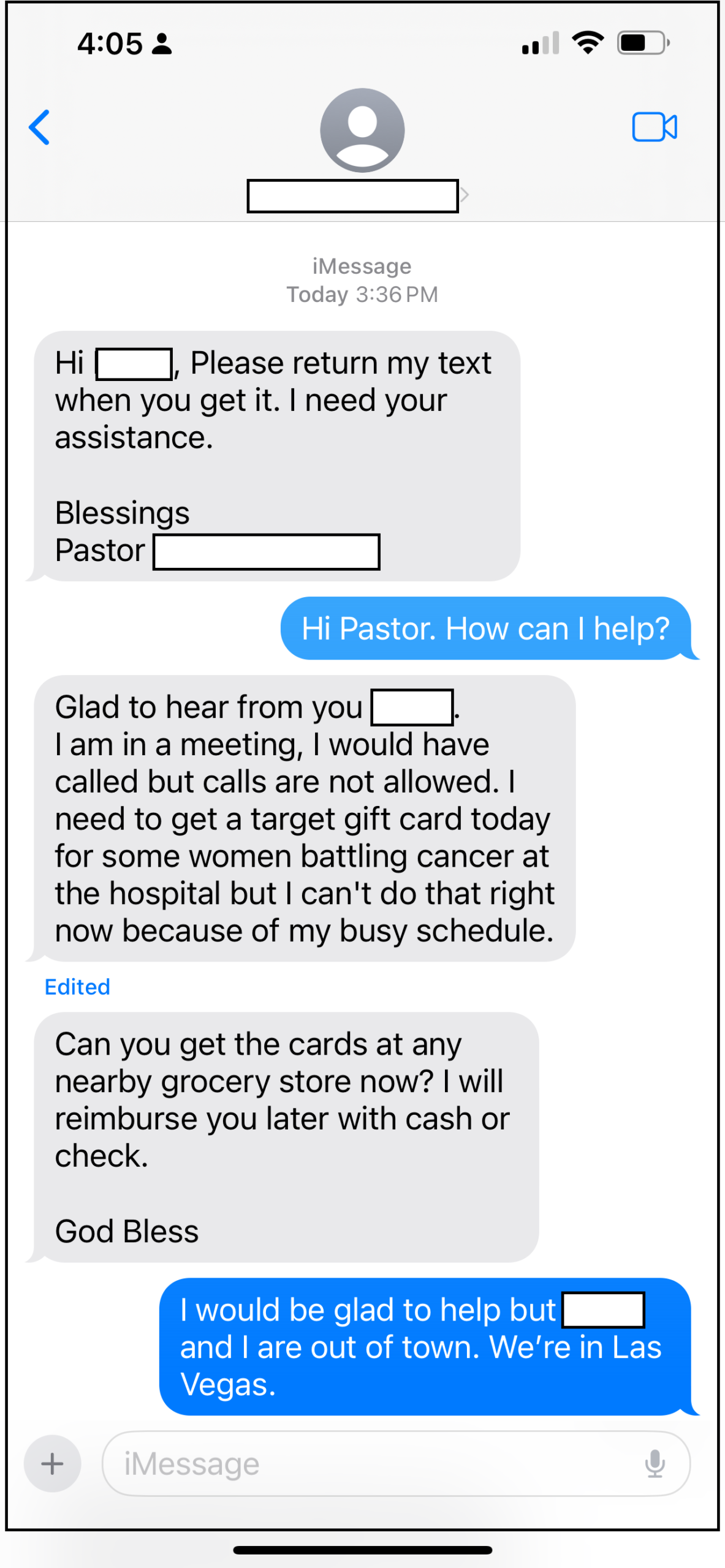
This week, more than a dozen people from our church received a disturbing text message. It appeared to come from my husband (the pastor) and it asked for “assistance.” The message was polite, familiar, and signed with his full name. It claimed he was in a meeting and needed someone to urgently buy gift cards for women battling cancer. He promised reimbursement later.
It was not him.
This was a scam. A classic gift card scam, but one that felt especially cruel.
What made this incident worse was how personal it was. The scammers clearly knew who to target. They had a list of church members or at least people connected to our church. The most likely source is social media. People who liked or commented on our church Facebook page suddenly found themselves on the receiving end of a message that felt trusted, urgent, and faith-based.
That trust is exactly what the scammers were exploiting.
Impersonating a pastor is not just identity theft. It is an emotional violation. Pastors are often seen as helpers, counselors, and moral guides. Using that role to pressure people into sending money, especially under the guise of helping cancer patients, is deeply upsetting. It damages trust and creates fear and confusion within a community that is built on care and goodwill.
Several red flags were present in the messages:
- A sense of urgency.
- A request to buy gift cards.
- An explanation for why a phone call was not allowed.
- A promise of reimbursement later.
- A generic greeting sent to many people at once.
Still, when a message appears to come from someone you respect and know personally, logic can take a back seat to emotion.
This incident was painful for our family. Seeing my husband’s name used to deceive people who trust him was heartbreaking. It also forced us to warn our congregation, reassure people, and clean up confusion that we did not create.
If you are part of a church, school, nonprofit, or volunteer group, please know this: leaders will not ask you for gift cards, secret purchases, or urgent financial help over text. If something feels off, pause and verify through a known phone number or another trusted channel.
Scammers thrive on kindness and urgency. Communities thrive on trust. Protecting that trust means talking openly about scams like this, even when it hurts to do so.