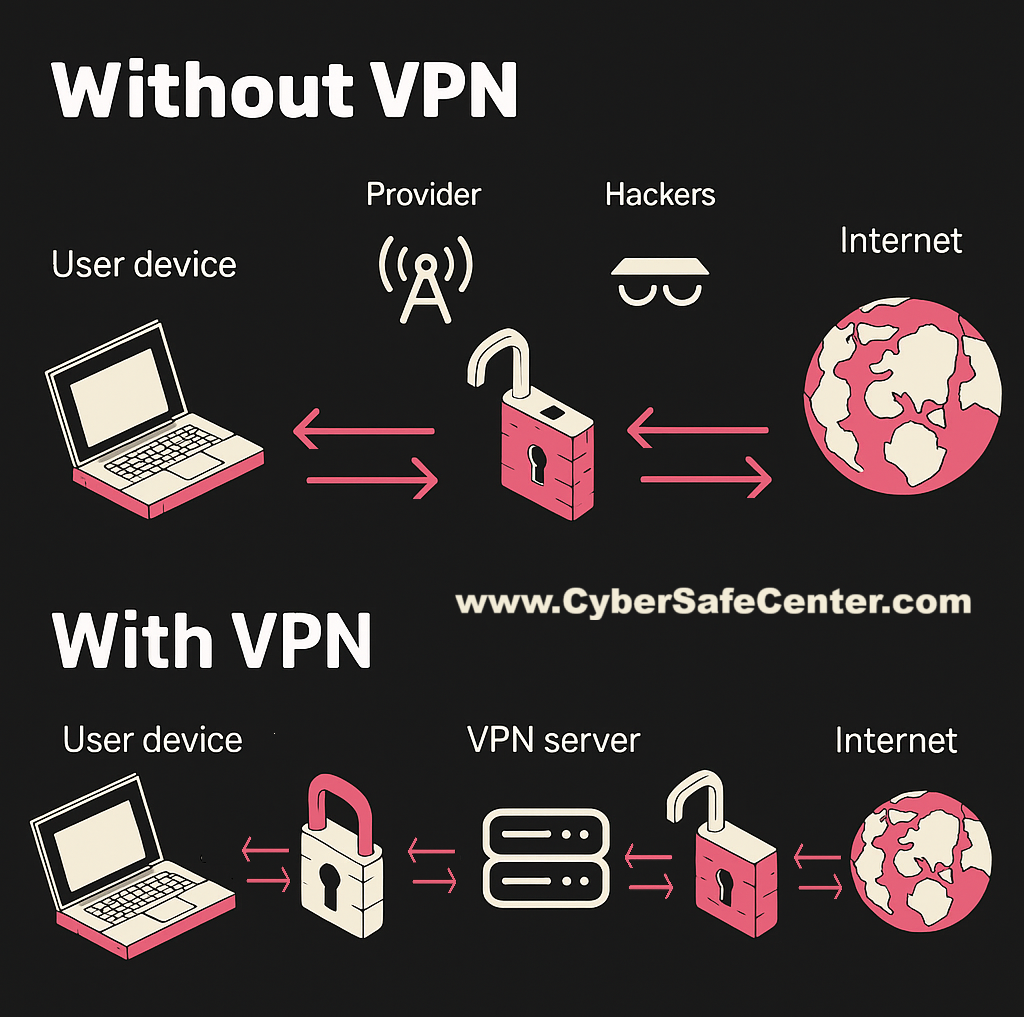
Using a virtual private network (VPN) service has become one of the simplest ways to protect your online activity, especially when you are away from your home network. A VPN creates an encrypted tunnel (see image below) between your device (phone or computer) and the internet, which prevents outside parties from seeing the sites you visit or collecting your data. It also shields you from common threats on public Wi-Fi such as snooping, data harvesting, and malicious hotspots that try to imitate legitimate networks.
I use a VPN every time I connect to any network that is not my trusted home Wi-Fi. This includes hotels, airports, coffee shops, conference centers, and even retail stores that offer free access. My personal choice is NordVPN, a well known provider with strong security controls and a large global server network. It is easy to turn on, works on both my phone and computer, and gives me peace of mind when I am working or browsing away from home.
Never use free VPNs. Many of these services earn money by collecting and selling user data which defeats the purpose of using a VPN in the first place. Some free VPNs are operated by companies in China or other regions with weak privacy protections and unclear ownership. That means your data could be monitored, logged, or transferred without any transparency. A trustworthy paid provider is essential if you want real security.
The benefits of a reputable VPN are clear. It keeps your login sessions private which lowers the risk of account takeovers on vulnerable networks. It also reduces certain targeted scams since criminals have less information about your location and device. VPNs are no longer just for frequent travelers or technical users. They are now a practical safety tool for anyone who moves between networks throughout the day.
There are tradeoffs. A VPN can occasionally cause problems in certain apps or websites. Some services block VPN traffic to prevent fraud. Others misread your location and show the wrong region or require extra verification. When that happens, I simply switch the VPN off, complete the task, and turn it back on when finished. This small inconvenience is worth the added protection.
A VPN is not a complete security solution, but it is a valuable layer that keeps your data private and makes you harder to target. If you have specific questions about a VPN service, please contact me and I’ll try to help.