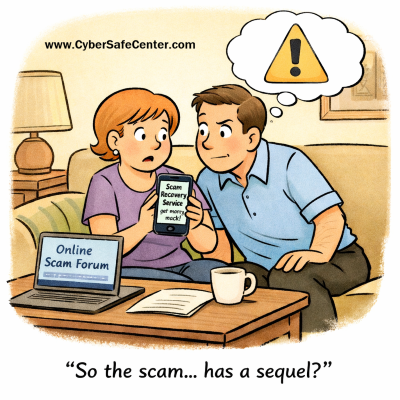
After someone loses money to a scam, the damage is not always over. A growing number of people are being targeted by a second scam, fake “scam recovery” services that claim they can get stolen money back.
I have had many people tell me their scam stories in person. That is absolutely fine and honestly important. Warning your friends and family helps others avoid the same traps. The problem starts when those stories become visible to the wrong audience online.
Scammers actively look for victims who admit they were scammed. They monitor Facebook scam groups, comment threads, and public posts where people share what happened to them. In some cases, victim details are also shared on so-called “sucker lists” that circulate between fraud groups. Once your story is found, the next pitch quickly follows.
The hook sounds comforting. A recovery service claims they specialize in tracking scammers, hacking crypto wallets, or reversing fraudulent transactions. They often present professional websites, testimonials, and urgent messages promising results. All they ask for is an upfront fee, usually paid in crypto, gift cards, or wire transfer.
This is where the second scam begins.
The truth is simple but hard to accept. Once money is sent through cryptocurrency, gift cards, or peer-to-peer payment apps, it is almost impossible for a private company to recover it. There is no secret system and no ethical hacker quietly pulling funds back. In many cases, these recovery services are the same scammers returning for more, or a new group exploiting your hope.
After payment, victims are often told there are delays, legal hurdles, or additional fees required to finish the recovery. The losses can quickly multiply.
If you have been scammed, report it immediately to your bank or payment provider and file reports with official consumer protection and law enforcement channels. Share your experience thoughtfully with people you trust. Just be cautious about posting details publicly.