This hasn’t happened to me yet, but I wanted to warn you of a new phone text risk.
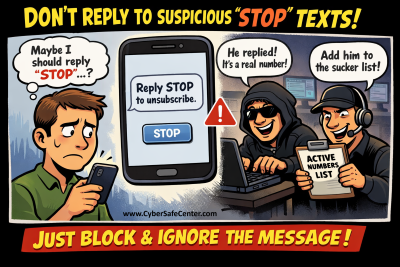
If you get a random text message that ends with “reply STOP to unsubscribe,” don’t assume it’s a legitimate business. If you don’t recognize the sender, replying at all can make things worse.
Here’s why: scammers send bulk texts to huge lists of phone numbers, many of which are old, recycled, or simply guessed. Their first goal is not always to trick you into clicking a link. Often, it’s to find out which numbers belong to real people.
When you reply “STOP,” you confirm three valuable details: the number is active, someone reads texts on it, and they’re willing to engage. That makes your number more valuable for future scams, and it can land you on “active number” lists that get shared or sold.
Once they know your number is live, the next messages may be more convincing: fake bank alerts, “account locked” warnings, job offers, or urgent “family emergency” texts. Some scammers also use the response to time follow-up calls and targeted phishing attempts.
What should you do instead?
- Do not reply. Not “STOP,” not “wrong number,” not anything.
- Block the sender. On iPhone or Android, you can block the contact right from the message details.
- Report as junk or spam if your phone offers that option.
- Be cautious with links in any unexpected text, even if it looks like it came from a delivery service or retailer.
If the text is from a company you actually use and you want fewer messages, unsubscribe through the official app or website, or reply STOP only when you are sure the sender is legitimate. Otherwise, the safest move is simple: block and move on.